About UltraHMB™
The Science of HMB-Ca
- Home
- The Science of HMB-Ca
Understanding β-hydroxy-β-methylbutyrate — a key metabolite for muscle protein turnover, sports nutrition, and healthy aging.
What is HMB?
First discovered in the late 1980s by Dr. Steven L. Nissen at Iowa State University, beta-hydroxy-beta-methylbutyrate — commonly known as HMB — has established itself as a key ingredient in sports nutrition and muscle preservation. The molecule is widely recognized for its role in regulating muscle protein turnover through direct interaction with cellular signaling pathways, in a manner distinctly from its parent amino acid, leucine.
Scientifically Researched
HMB is a well-studied compound that has been the focus of decades of scientific research.
Supports Healthy Muscle Maintenance
Unlike its parent amino acid, leucine, HMB works through unique cellular pathways that help support muscle.
HMB
How It Works
How does HMB Work?
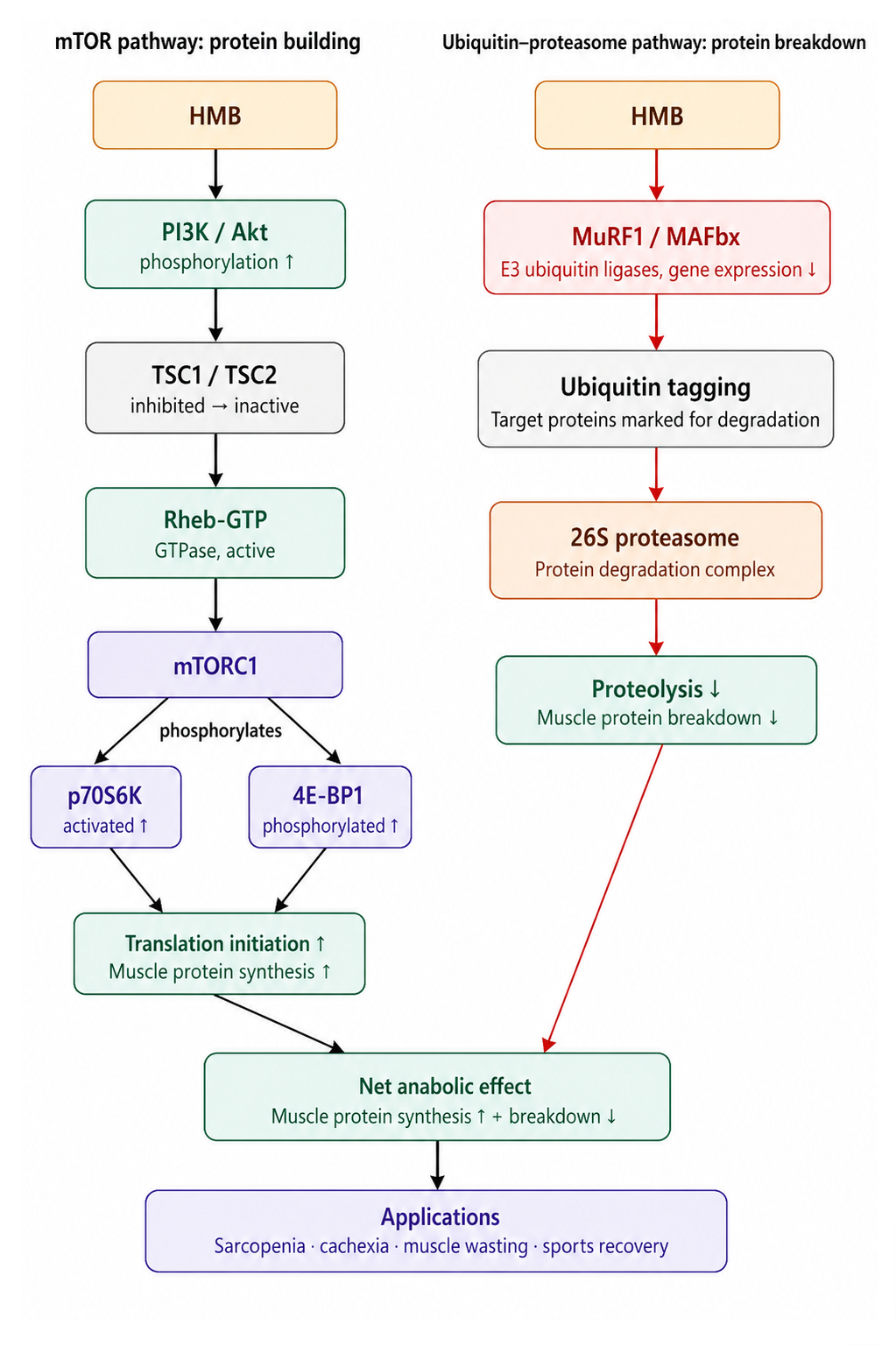
The primary function of HMB is to shift the balance of muscle protein turnover away from catabolism (breakdown) and toward anabolism (building) through two distinct mechanisms.
Anabolism
HMB stimulates the mTOR pathway, activating downstream effectors such as p70S6K and 4E-BP1 to drive muscle protein synthesis.
Anti-catabolism
Simultaneously, HMB suppresses the Ubiquitin-Proteasome System that is responsible for targeting and degrading structural muscle proteins during stress, illness, or exercise.
This dual mechanism (synthesis ↑, and breakdown ↓) is drawing more and more interest in HMB’s application beyond athletic performance, extending to sarcopenia, cachexia, and other clinical conditions involving muscle wasting.
DIETARY HMB
Can I Get Enough HMB In My Diet?
HMB is produced endogenously, but only in minute quantities. It has been estimated that 5% of dietary L-leucine is converted to HMB through oxidation. As a result, obtaining meaningful amounts of HMB from whole food sources alone, such as catfish, grapefruit, and alfalfa, could be challenging for some at times.
FORMS OF HMB
What Are Common Forms of HMB?
Commercial HMB supplements are available in two distinct chemical forms.
HMB-FA (Free Acid)
Often marketed for immediate pre-workout delivery. As a liquid or gel at room temperature, however, the free acid entails additional handling requirements during manufacturing and offers limited formulation flexibility.
HMB-Ca (Calcium Salt)
The most popular form — a stable, white crystalline powder at ambient temperature. It is well-suited for scale-up and long-term storage, and offers a wide variety of formulation options. UltraHMB™ is HMB-Ca.
Formulate with UltraHMB™
Explore application evidence or speak with a Vesta® ingredient specialist about bringing HMB-Ca into your next product.